

Collecting baobab
Baobab trees are everywhere in Gambia. Most trees grow in rural areas and even in cities some people have a baobab tree in their compounds. Sadly, many baobab trees are chopped down for urban settlements and development of agricultural land. The trees benefit communities with their nutritious and medicinal value, but they do not have much economic value.
In urban areas, if not chopped, a baobab tree belongs to the compound in which it grows. In rural villages baobab trees do not belong to someone, but are considered a benefit to the whole community that owns a land. As the community of Jammeh Kunda, on the North bank of the Gambia river, explained to me: “The tree is here for all that live in this community. During harvest whoever suffers takes what he needs and benefits.“
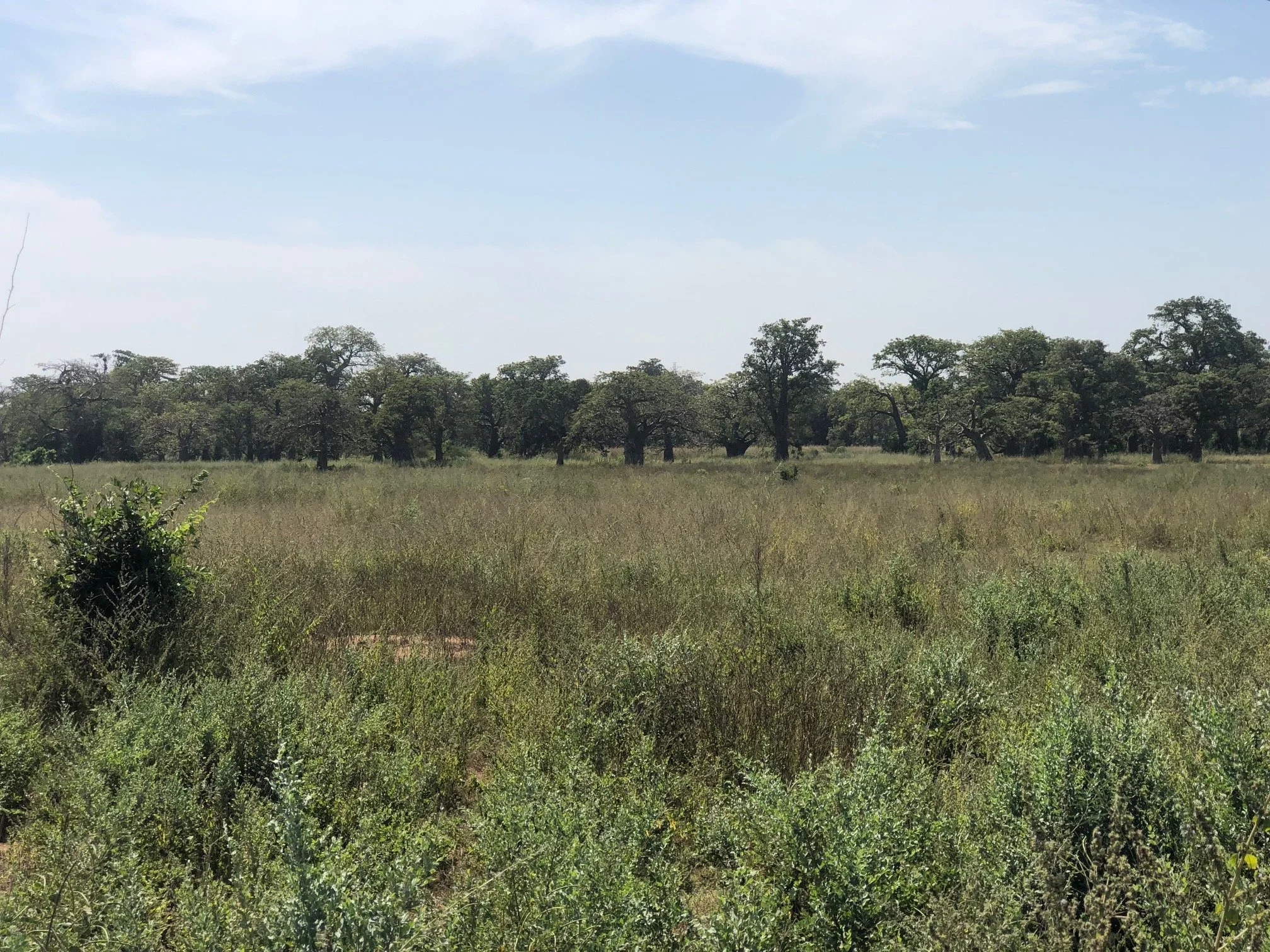
Baobab trees on the North Bank of the Gambia river that belong to the communities that own the land.
Most compounds and communities do not harvest baobab fruits for economic value. Boys will sometimes climb the trees to collect some fruits and sell it for little profit to traders. These traders sometimes sell to local and urban markets, but most fruits are taken to neighbouring Casamance in Senegal.
In Jammeh Kunda I engaged in another baobab dialogue with a group of women and their village council. His name, by the way, is Sitokoto. Meaning: under the baobab tree. He was given this name because his mother she could not reach a health care facility and gave birth to her son under a baobab tree. She was lucky, in Gambia many women die giving birth.
“There will not be any fruit of this baobab tree going anywhere, but to this project.”
The community of Jammeh Kunda belongs to a different tribe than the one in Faas, where I tested the first baobab dialogue. Faas is a Wolof community, the people in Jammeh Kunda are Mandinkas. The future dreams of the women in both communities, however, are very similar. A young Mandinka woman shared a very emotional dream. In tears she told us about the poverty that she was born in. All she wanted for her future was to find an opportunity to educate herself, or any other opportunity, to take her parents out of that situation. All women listening to her, including myself, were crying.
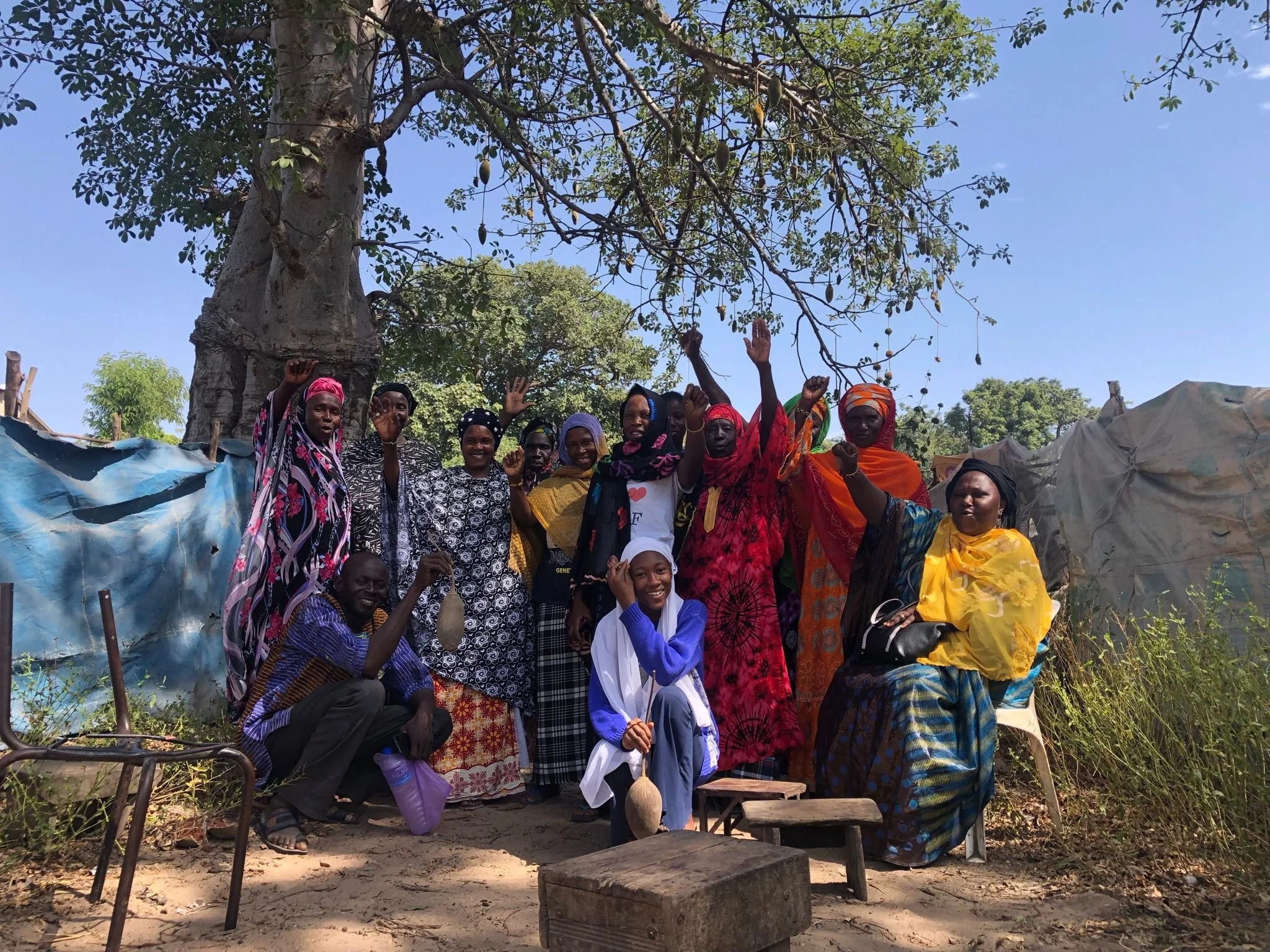
Women in Jammeh Kunda want to join the baobab project and harvest the baobab fruits in their community to benefit their futures.
This time, instead of asking them for their own responsibility, I discussed the economic potential of the baobab fruit with them. I asked them if they ware aware of the value of baobab powder in urban and international markets. I also asked them if they knew about the oil contained in baobab seeds. They were unaware.
I explained that I want to collect their fruits for a fair price and create value with the powder and oil. I would need them and other communities to collect enough to make a product that sells. Part of the revenue will be reserved to flow back to the harvesting communities to invest in their future dreams. One women stood up, took the baobab as a talking stick and firmly stated: “There will not be any fruit of this tree going anywhere, but to this project. The value of a tree should come back to those that live under it.”