

Reliance, strength, benefit
Gambians believe that when you lean against a baobab tree it will give you confidence, strength and power to benefit your community. Its fruits have been of important value for African communities in isolated and harsh conditions for centuries. Mainly for its high nutritional and medicinal value, and also for tools and shelter.
Some generations back, village chiefs would plant baobab trees next to mud huts that were built in a circle to form a community. The trees had important beneficial value, especially as shade, nutrition, medicine, and strong fibers for ropes. When someone would get lost in the bush, they would search for such circles of baobabs, as it was a sign of human life. Today these circles can still be found as a sign of early settlement.
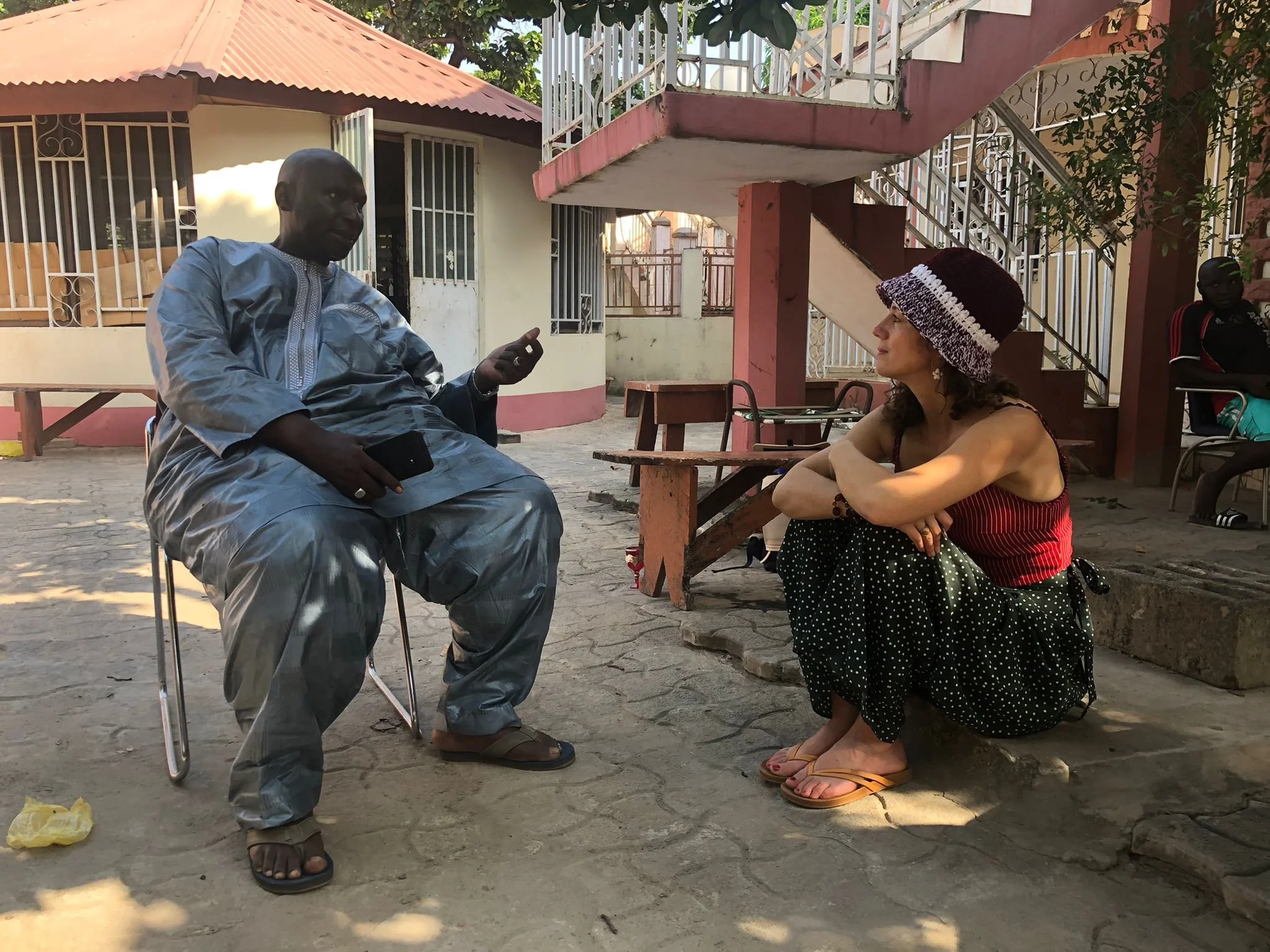
Many elders told me their baobab stories. Here Ousman Cham shares his wisdom on baobab trees with me. (Photo: Dave Jongeneelen)
The fibres in the trunk of baobab trees were used to make ropes for fishing, fetching water and cattle. During tribal and colonial wars the big trunks of baobab trees were also used as shelter and protection from hostile arrows and bullets. Today, the hollow trunks of large baobab trees are sometimes also used for shelter from the burning sun. There are even examples of a toilet (Namibia), a bar (South Africa), and a church (Namibia) built inside a baobab tree.
Still today baobab benefits communities with its extremely high nutritious value. Different parts of the plant supply varying amounts of protein, vitamin C, antioxidants, potassium, magnesium, iron, zinc, calcium and B vitamins. Especially the leaves and the pulp or powder are used in local dishes and for medicinal purposes. Children open the baobab like a coconut, add sugar and drink it as a treat. Sick children, especially with stomach pains and diarrhoea are given baobab to cure them. In traditional medicinal use, baobab is an important cure for people with diabetes. Internationally, also, baobab is increasingly valued as a superfood and an important prebiotic supplement.
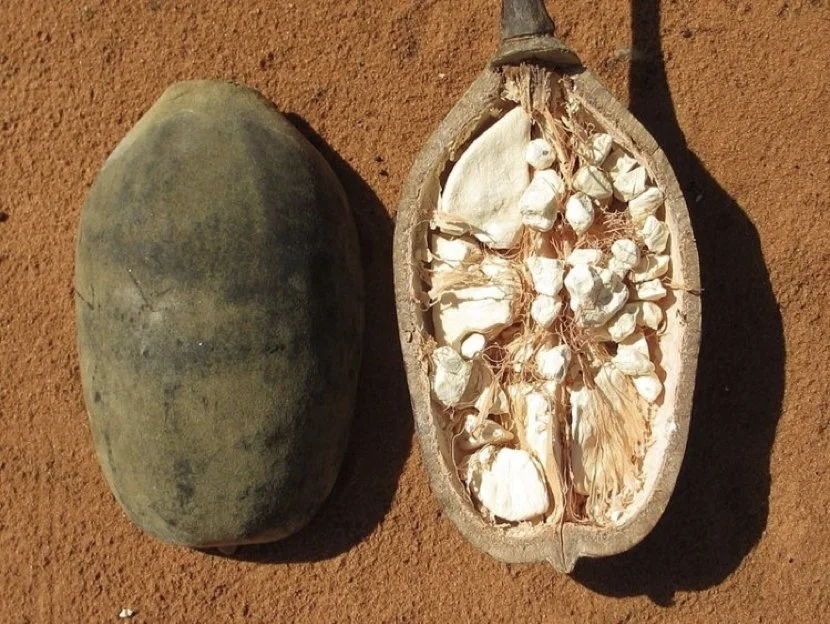
A baobab fruit contains highly nutritious pulp that is naturally dried, and seeds that can be pressed for a natural and regenerative oil used in cosmetics.
In Gambia, the potential to press oil from baobab seeds is widely unknown. The oil is very rich in vitamin A, C, D, E and F, linoleic acid, higher sterol content, and fatty omega 3 and omega 6 acids. I want to explore opportunities for pressing this natural and regenerating ingredient for cosmetics as a value addition to benefit communities.