

Baobab dialogues
One goal in this project is to portray the baobab tree as a metaphor for good ancestry and future thinking. The oldest baobab trees may have witnessed life for over 2000 years. The youngest trees will look over African communities way beyond our lifetimes. Also, baobab seeds that are planted today will grow its first fruits after only 25 to 200 years. Who are those next generations picking its fruits? What value will they harvest? What do we want them to remember us for as their ancestors? And how do we start creating that future today?
For a first field test on the power of this metaphor I visited Faas, a young settlement on the South Bank of the Gambia River. The goal was to engage in a dialogue with women of different generations on being a good ancestor. Over 30 women and their alkalo - the traditional chief of the community - gathered under an old baobab tree. It was a good mix of elderly women, middle aged women, and young women that were feeding their babies.
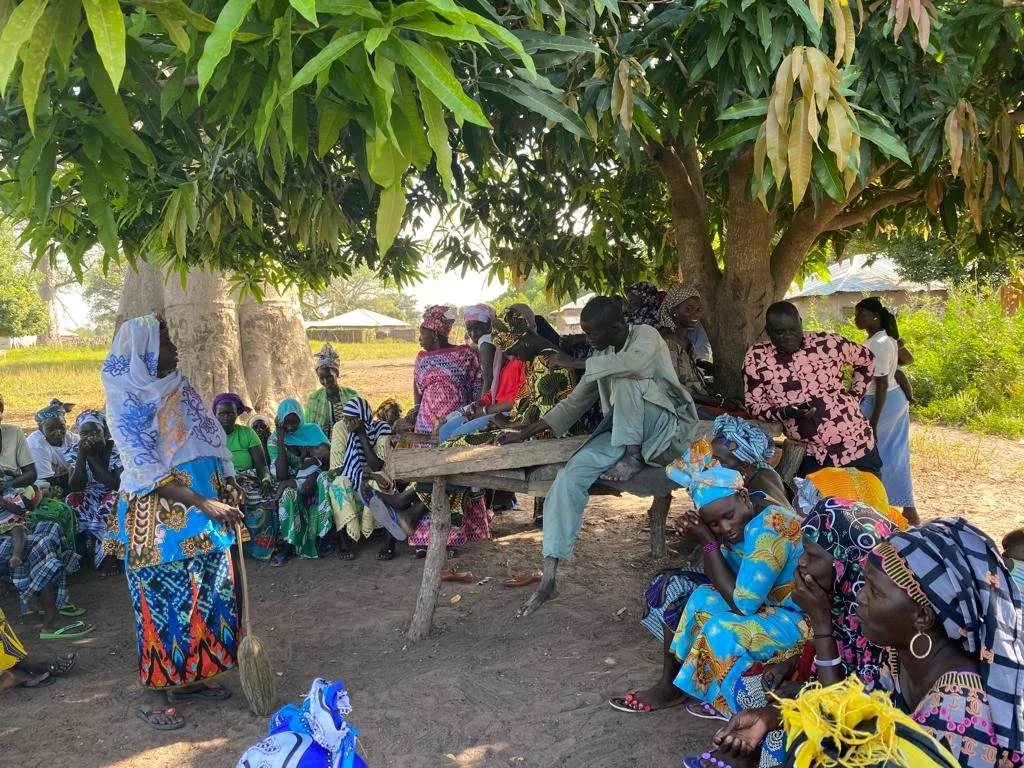
Women of different generations engaged in a dialogue about being a good ancestor under a baobab tree in Faas, a community on the Southbank of the Gambia river. (Photo: Shari Veldhuizen)
To facilitate a dialogue between them, a big baobab fruit was used as a talking stick. The only one speaking was the woman holding the baobab. All others listened. This helped them to speak from their hearts without interruption and to encourage true listening without the goal to respond. The baobab was passed on so everyone was invited to be heard. As I facilitated the dialogue, the wonderful Fatou Cham - an amazing power woman and the chair lady of Buzz Women - translated for me.
We put the big baobab fruit in the middle of the group for the first one who wanted to speak. Our first question to the women of Faas was if anyone knew how old the baobab tree is that we were sitting under. No one knew. One of the elderly ladies - a woman around her 70s without many teeth and with a colourful dress - got up and took the talking stick. With this big baobab fruit in her hand, she told us that she had found the tree there when they started the community of Faas, some 25 years ago. She shared a beautiful story of what the land was like in those days. And she remembered the hard work that was put in to develop the settlement to what it is today.
As the baobab fruit was passed on, other elders and the alkalo also started sharing their stories. First the land of Faas was cleared of trees and bush. A big tent was put up on the cleared land to house everyone who wanted to help build the community. Boreholes were drilled for water without modern tools, an almost impossible task with ground water up to 30 meters deep. Dirt roads were paved to access the main high way for food and supplies. Bees had to be removed from trees. The elderly ladies knew exactly which compounds were the first ones build for the first settlers.
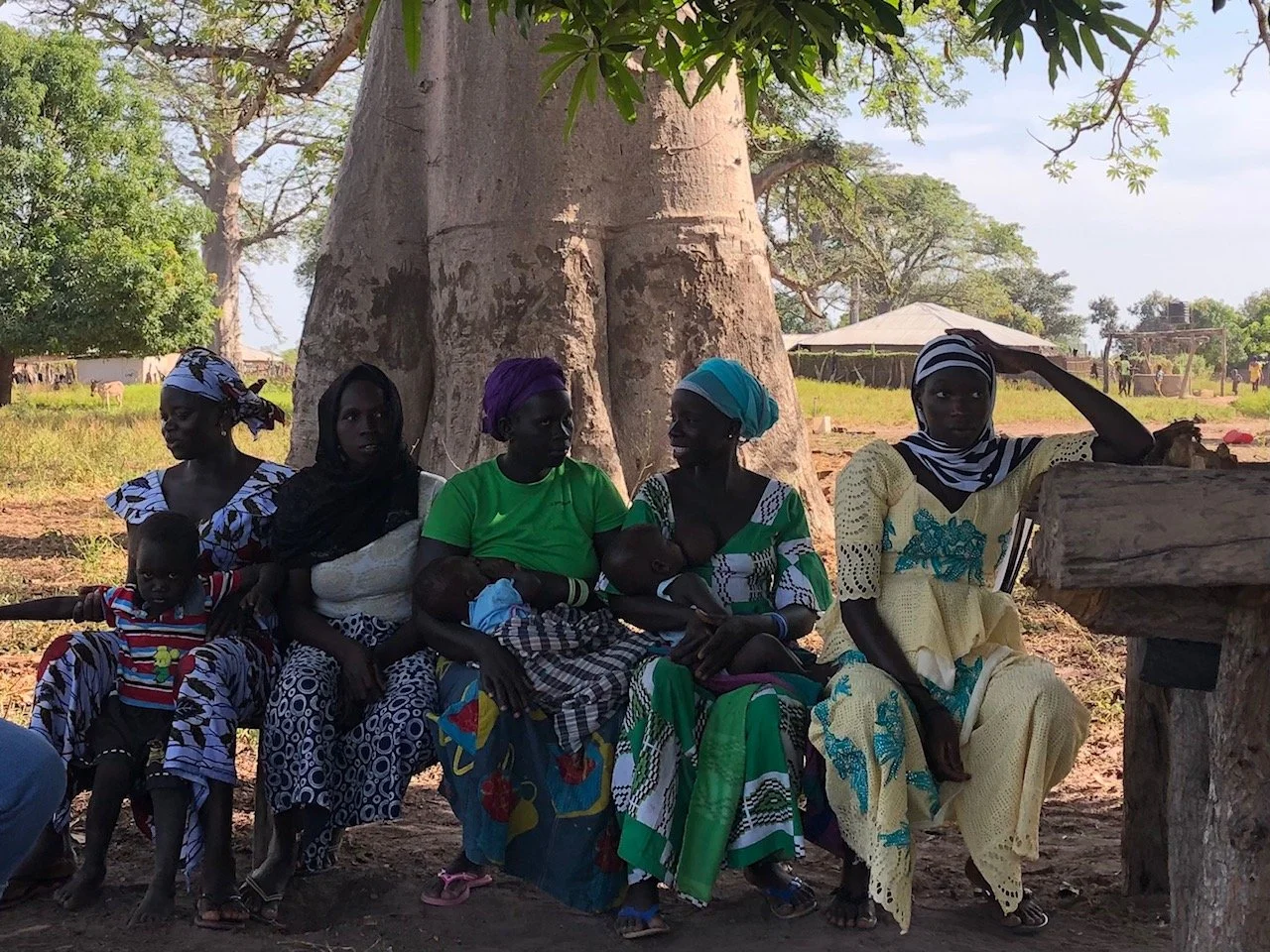
Young women under a baobab tree in Faas, Gambia, engaged in a dialogue about the future: what will be the fruits for their babies’ children and what seeds will they have to start planting today?
For a second round, we asked all women to close their eyes and imagine the future. What did they want their community to be when they themselves have passed? What stories would they like the babies on some of the women’s laps to share under this same baobab tree when they have become the elders of Faas. What did these women want to be respected for as their ancestors?
Now the younger generation started sharing more stories. The first one to stand up expressed that she had never heard the history that was just shared by the elders and the alkalo before. She realised that in 25 years time a lot can change. So looking forward she also felt a lot of impact could be made. She shared that thinking like this gave her trust and helped her to feel inspired. A lot of women confirmed this sentiment.
Looking at the future the main dreams of the younger generation were water for subsistence farming and agricultural activities for economic development; health care (especially for women giving birth), education (both Islamic - or Madrassa - and English) or roads to provide better access to health care facilities and schools; processing tools; market development and shops; and concrete instead of mud or grass buildings.
One woman also expressed that she wanted to be exposed to ideas for the future of which she was currently unaware. As an example she gave a recent training of Buzz Women that she received on financial management and especially saving money. Before that training she was unaware of her own opportunity to save funds for developing a better future for herself, her children and her community. She shared this to emphasise the power of sharing dreams and fears, to take responsibility and invite others to find impactful solutions.
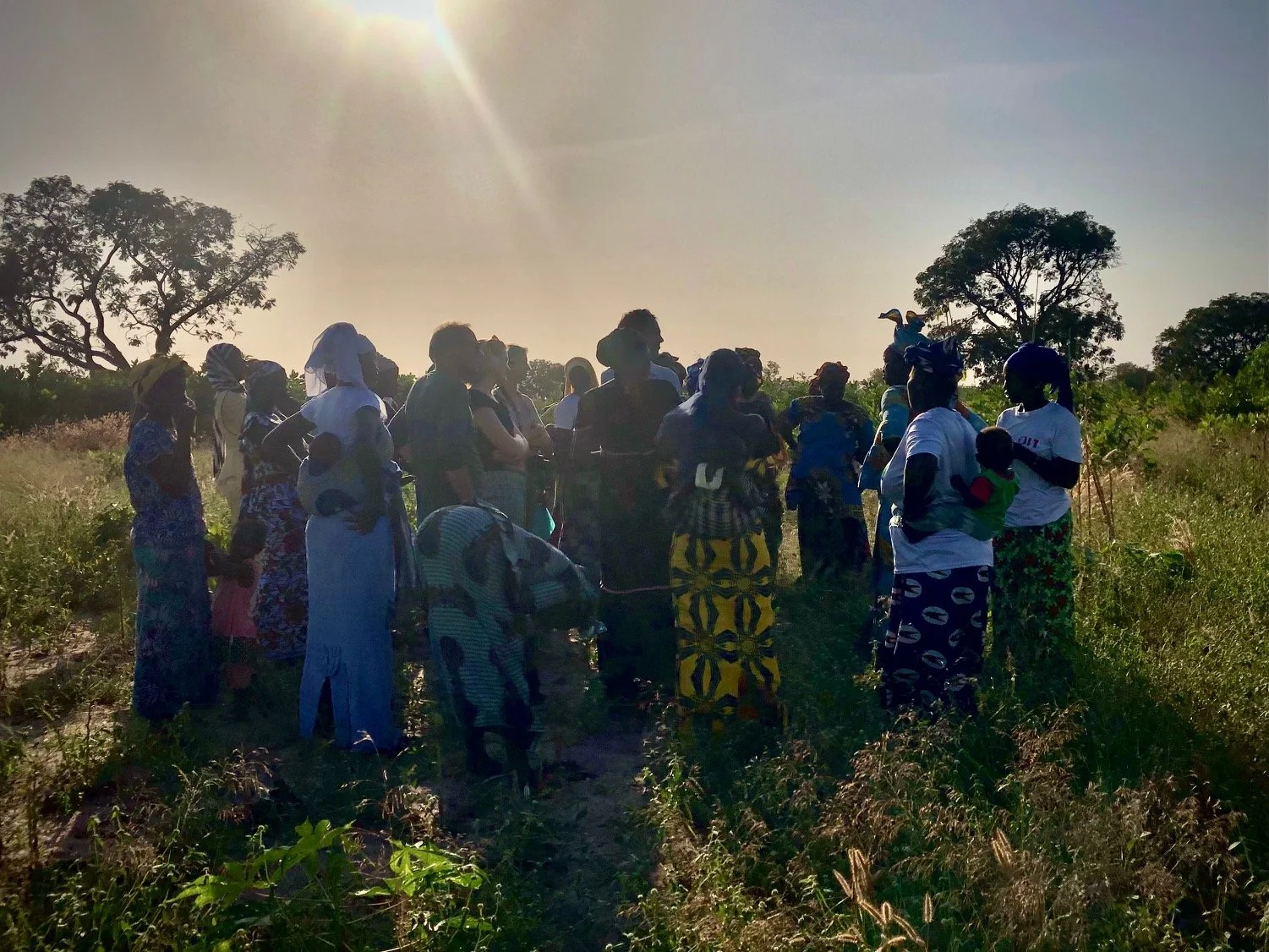
Women of Faas in their garden that they want to develop for improved subsistence farming and economic agricultural activities.
Finally, in a third round we asked the women to look around and feel their bodies as we were sitting under the baobab tree. Imagining their futures, what did each of them think and feel they could contribute to that future today? What was going to be their first step to take responsibility and start creating? First it was quiet, some women started giggling, and most just stared at us or the ground. As the baobab fruit was going around, most women shied away and passed on the talking stick without sharing. One brave woman said she wanted to contribute with her new savings and some other women confirmed. But other than that the women just seemed confused.
We asked who they thought was going to create that future then. A middle aged lady in a black dress, the anchor of the group, got up and started sharing. She expressed that she, and her female peers, were not used to speaking up as we did that day. Even for her it was difficult to find confidence and very scary to share her ideas. But she also realised that it did not help to keep quiet and depending on others - I am assuming men and white people. She really wanted to practice this dialogue more often, and to build confidence of women to discuss their own responsibility in creating the future.
For me this is a great example of how past experiences can create a culture of suppressed fear and anger. Without awareness this fear or anger keeps people in control and dependent. It creates an ironic repetition of past behaviour that puts the blame on others and does not support long-term needs or shared value. Imagining the future and dialogue can help to create awareness, open up and take responsibility to recreate.
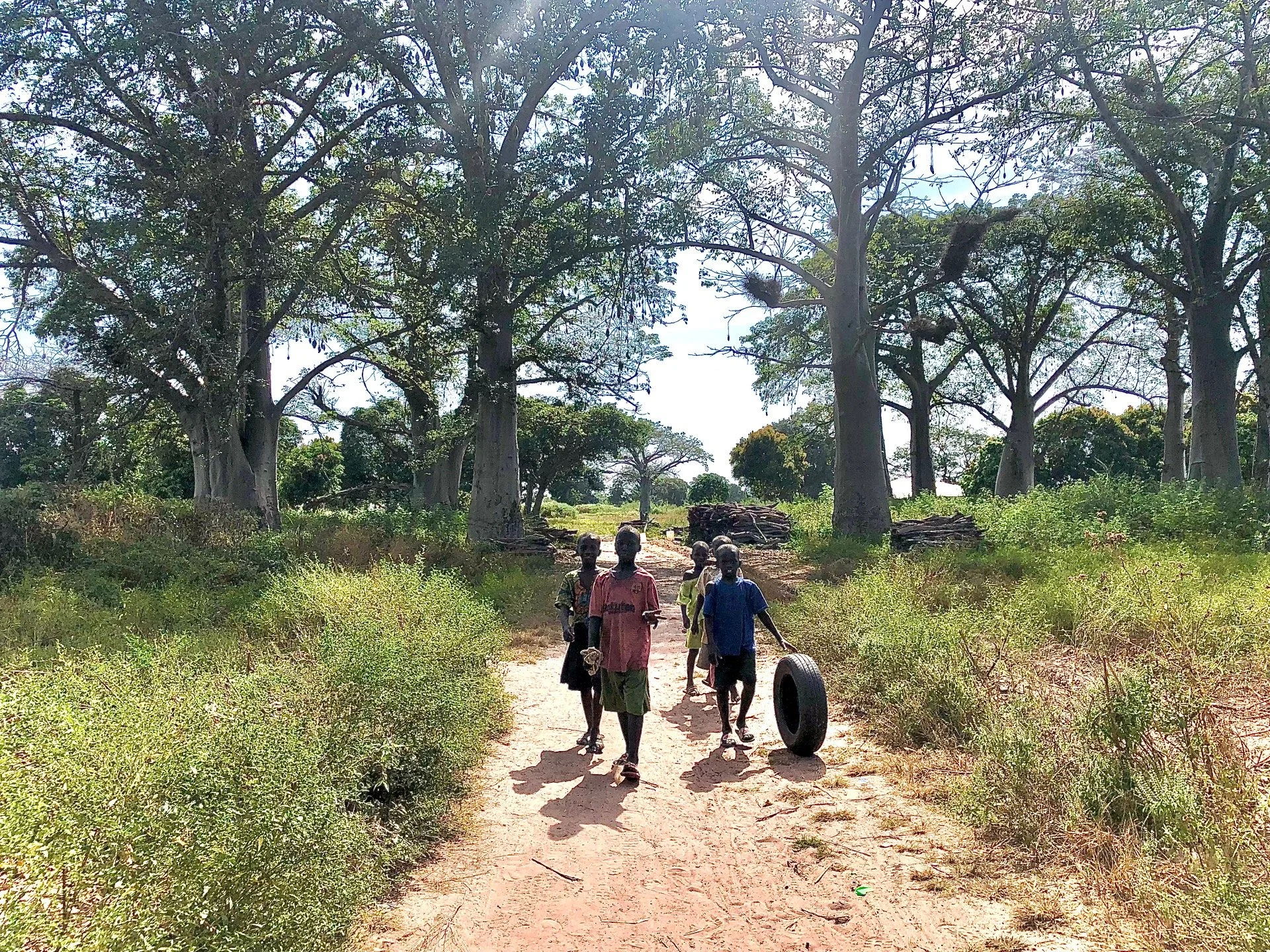
The next generation of Faas playing with baobab trees in the back.
I was introduced to the community of Faas by Buzz Women, a new NGO in Gambia that is on a mission to make low-income women the drivers of prosperity, for their own selves, their families and their communities. With their school on wheels, a van equipped with training materials, they roll into remote villages to deliver training in financial management, entrepreneurship and leadership. This way they make knowledge and opportunities available for women that usually cannot access such development programs. The power of Buzz Women is their extensive reach, within two years time they have reached over 7,000 women in The Gambia. Their ambition is to help 100,000 women out of the money lender trap and starting successful businesses in the next 5 years.
Together with Buzz Women, I have set an ambition to further develop the Baobab dialogues. Not only as a constructive conversation about the future between generations, but also between for instance genders and continents.